
Gravity Fed vs Siphon Fed Airbrush: Complete Beginner’s Guide 2026
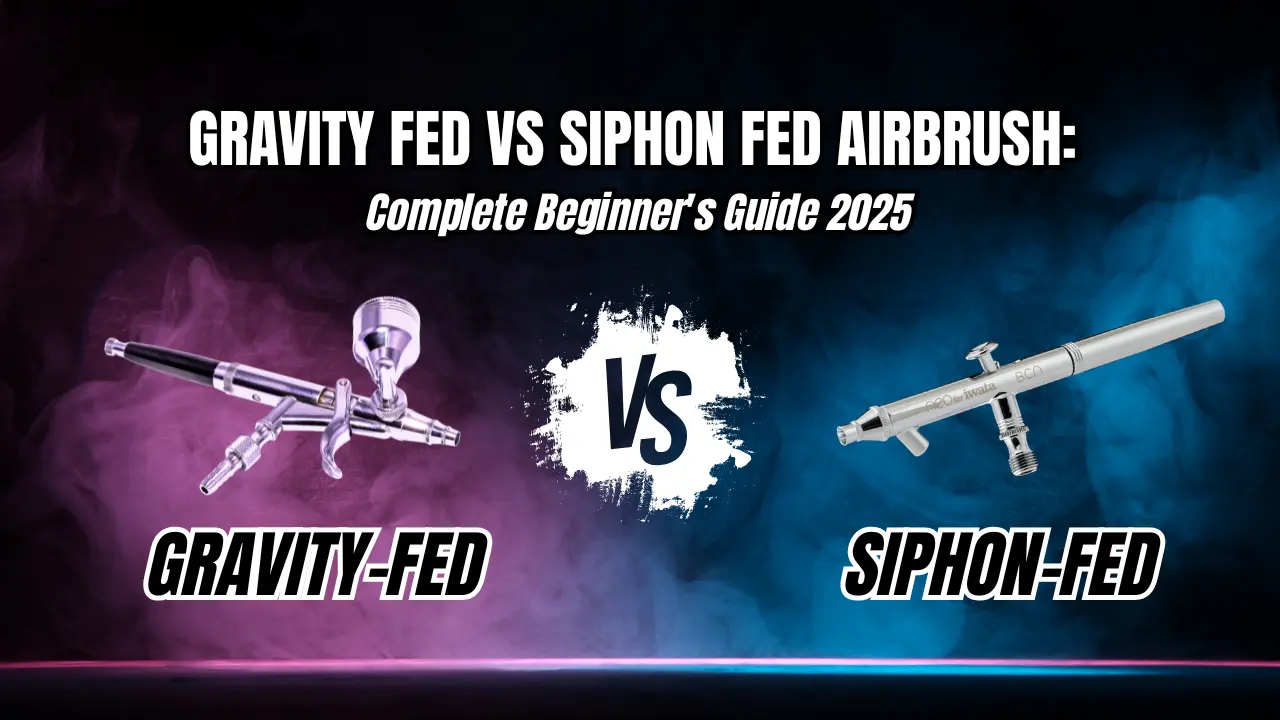

Understanding the difference between gravity fed vs siphon fed airbrush systems is crucial for anyone starting their airbrush journey. If you’ve ever walked down the airbrush aisle at an art store, you’ve probably noticed some airbrushes have little cups on top, while others have bottles hanging underneath. This comprehensive guide will help you choose the right airbrush type for your needs.
What Are the Two Main Types of Airbrushes?
Gravity Fed Airbrushes
Gravity fed airbrushes feature a small cup mounted on top of the airbrush body. Paint sits in this cup and gravity naturally pulls it down into the airbrush mechanism. This design allows for lower air pressure operation and exceptional control for detailed work.
Siphon Fed Airbrushes (Bottom Feed)
Siphon fed airbrushes have a bottle or jar that attaches to the bottom of the airbrush. Air pressure creates suction that pulls paint up from the container into the airbrush. These systems can hold significantly more paint than gravity fed alternatives.
Gravity Fed vs Siphon Fed Airbrush: Key Differences
| Feature | Gravity Fed | Siphon Fed |
| Paint Capacity | Small cup (0.25-0.5 oz) | Large bottles (2-4 oz) |
| Air Pressure | Lower (15-25 PSI) | Higher (25-55 PSI) |
| Best For | Detail work, portraits | Production work, larger projects |
| Refilling Frequency | Frequent | Less frequent |
| Price Range | $50-200+ | $60-150+ |
When to Choose a Gravity Fed Airbrush
Gravity fed airbrushes excel in specific scenarios:
Detail-Oriented Projects “Generally when using the cup on top, the gravity fed airbrushes, it’s mostly for people who are doing more intricate things,” explains professional airbrush artist Takeshi Sano, who has 35 years of experience. “They tend to go towards portraits and other more detailed, more fine line art.”
Lower Pressure Requirements Because gravity assists paint flow, these airbrushes work effectively at lower air pressures. This translates to better control for fine lines and intricate details.
Custom Color Mixing The small cup design makes it easy to mix custom colors in small batches, perfect for artists who prefer to create their own unique shades.
When to Choose a Siphon Fed Airbrush
Siphon fed systems offer distinct advantages:
Extended Painting Sessions With 2-4 ounces of paint capacity, siphon fed airbrushes can handle hours of continuous work without refilling. “For us, we use the siphon fed because we just need to do a lot of movement and consistently paint for hours on end,” notes Takeshi.
Multiple Color Setup You can prepare multiple bottles with different colors and simply swap them out as needed. No constant cleaning and refilling required.
Production Work These airbrushes streamline workflow for artists working on multiple pieces or larger projects where speed and efficiency matter.
Gravity Fed vs Siphon Fed Airbrush: Which is Better for Beginners?
For newcomers to airbrushing, siphon fed airbrushes offer several advantages:
Learning Benefits
- More paint capacity means longer practice sessions without interruption
- Better stability from the larger bottle provides something substantial to grip
- Less frustration from constantly running out of paint during learning
- Single color start allows you to begin with just one paint color
Cost Considerations
You can start with one color and gradually build your paint collection, making the initial investment more manageable.
Professional Airbrush Recommendations
Best Siphon Fed Airbrush for Beginners
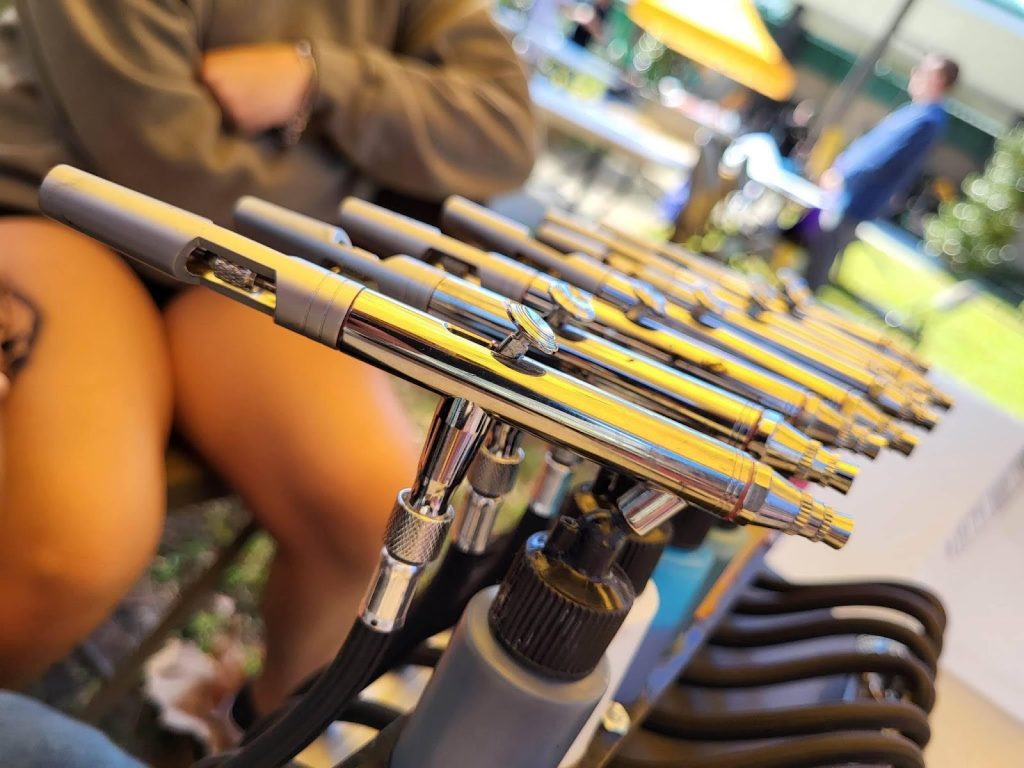
The Iwata HP-BCS (Eclipse) consistently receives professional recommendations. At approximately $130, this airbrush offers:
- Reliable performance for beginners
- Consistent spray patterns
- Available replacement parts
- Professional-grade construction
Why Quality Matters
Investing in a quality airbrush prevents common beginner frustrations. Cheap alternatives often produce inconsistent results, leading new artists to question their technique rather than the equipment.
Air Pressure Requirements: Gravity Fed vs Siphon Fed Airbrush
Understanding pressure requirements helps optimize your setup:
Gravity Fed Pressure Settings:
- Typical range: 15-25 PSI
- Lower pressure enables detailed work
- Gravity assists paint flow
Siphon Fed Pressure Settings:
- Typical range: 25-55 PSI
- Higher pressure creates necessary suction
- Still capable of detailed work with proper technique
Paint Compatibility and Capacity
Paint Types
Both gravity fed and siphon fed airbrushes work with:
- Water-based acrylic paints
- Airbrush-specific paints
- Properly thinned craft acrylics
Capacity Impact on Workflow
- Frequent refilling required
- Color changes need complete cleaning
- Better for small projects or samples
Gravity Fed (Small Cup):
Siphon Fed (Large Bottles):
- Extended work sessions possible
- Quick color changes with multiple bottles
- Ideal for production work
Cleaning and Maintenance: Gravity Fed vs Siphon Fed Airbrush
Both systems require similar maintenance routines:
- Daily cleaning with water-based paints
- Thorough cleaning between color changes
- Regular inspection of needles and nozzles
- Proper storage to prevent paint buildup
Common Mistakes to Avoid
Purchase Decisions
Avoid buying airbrushes from questionable sources like Temu, Shein, or unverified online sellers. Quality control issues and lack of replacement parts make these purchases problematic long-term.
Pressure Settings
Don’t assume higher pressure always equals better performance. Each airbrush type has optimal pressure ranges for best results.
Advanced Applications
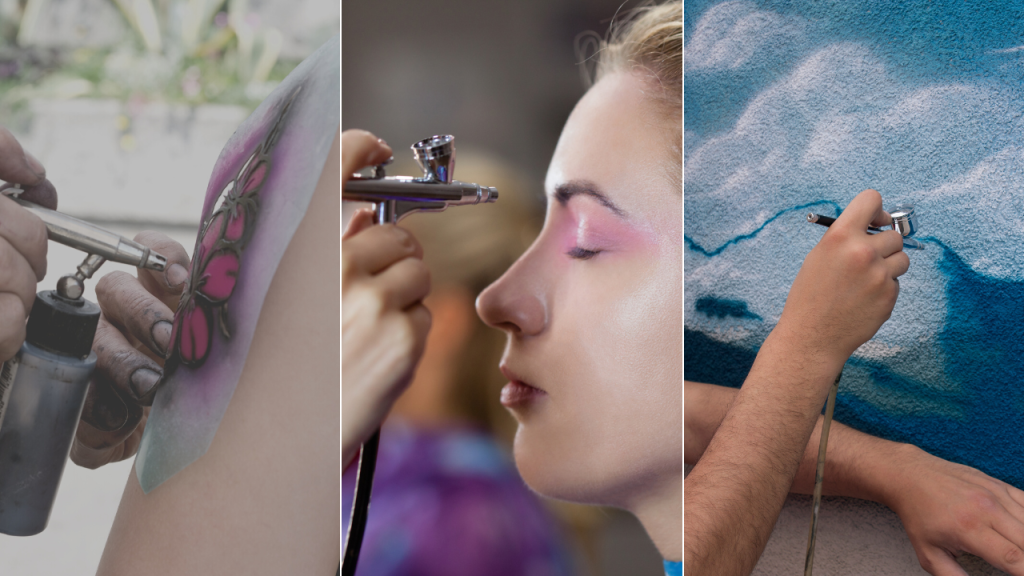
Automotive Work
Car painters often prefer gravity fed airbrushes with large cups for base coats and detail work, combining the benefits of gravity feed with increased capacity.
Fine Art Applications
Portrait artists and fine art professionals typically choose gravity fed systems for maximum control and precision in detailed work.
Commercial Production
Event artists, t-shirt painters, and production artists favor siphon fed systems for efficiency and extended working capacity.
Frequently Asked Questions
Q: Can I use a gravity fed airbrush for large projects? A: Yes, but expect frequent refilling. For extensive work, siphon fed systems prove more efficient.
Q: Which type requires less air pressure? A: Gravity fed airbrushes typically operate at lower pressures (15-25 PSI) compared to siphon fed systems (25-55 PSI).
Q: Are replacement parts readily available? A: For quality brands like Iwata, Badger, and Harder & Steenbeck, parts are widely available. Avoid unknown brands with limited part support.
Q: Can beginners achieve professional results with either type? A: Yes, but siphon fed airbrushes often provide a more forgiving learning experience due to larger paint capacity and fewer interruptions.
Conclusion: Making Your Choice
The gravity fed vs siphon fed airbrush decision depends on your specific needs:
- Choose gravity fed for detailed work, lower pressure operation, and custom color mixing
- Choose siphon fed for production work, extended sessions, and beginner-friendly operation
For most beginners, siphon fed airbrushes offer the best learning experience with fewer interruptions and more forgiving operation. You can always expand your collection with a gravity fed airbrush once you’ve mastered the basics.
Remember, your airbrush is just one component of a complete system. You’ll also need an appropriate air compressor, quality hoses, and proper fittings for optimal performance.
Ready to set up your complete airbrush system? Stay tuned for our comprehensive guide to air compressors and essential accessories for your airbrush setup.